
Advanced Surgery
At Thameswood Vets, we have the in-house expertise to treat more complex surgical cases. Additionally, we continually invest in our facilities and equipment to ensure we provide the best possible care for your pets.
Laparoscopic Spay
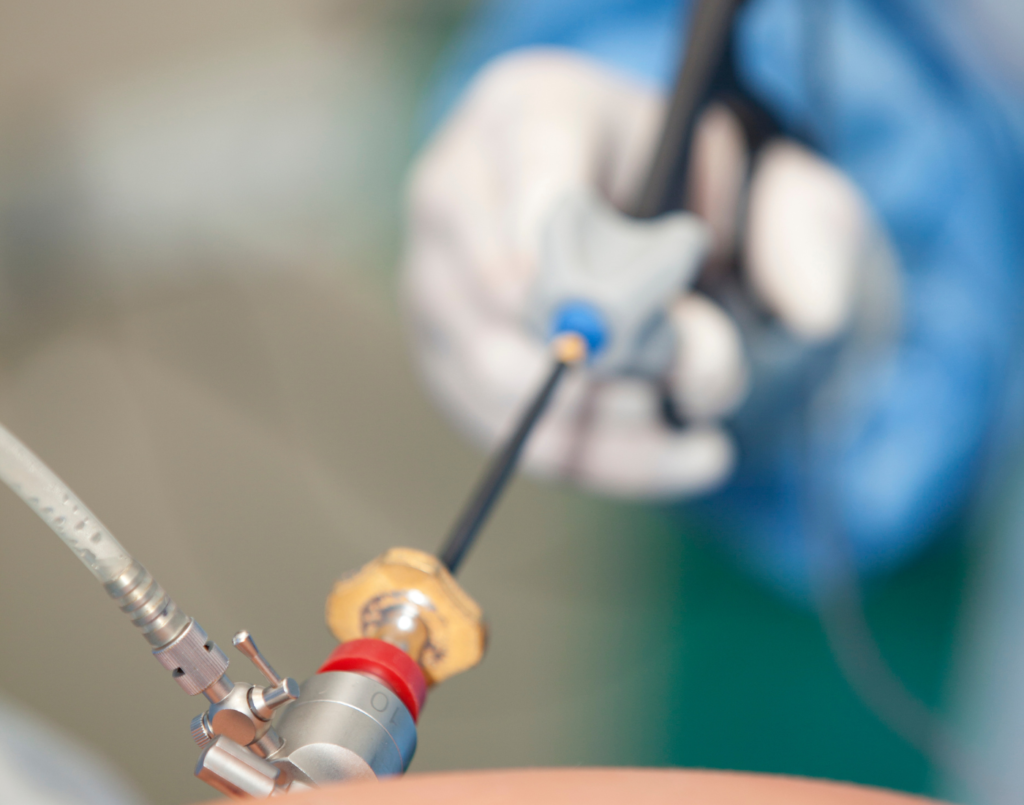
Keyhole or laparoscopic spaying is a less invasive surgical procedure. It involves making two small holes, instead of one larger one and as a result, dogs should be more comfortable with a faster recovery and they can return to exercise within a few days.
Cruciate & Knee Surgery
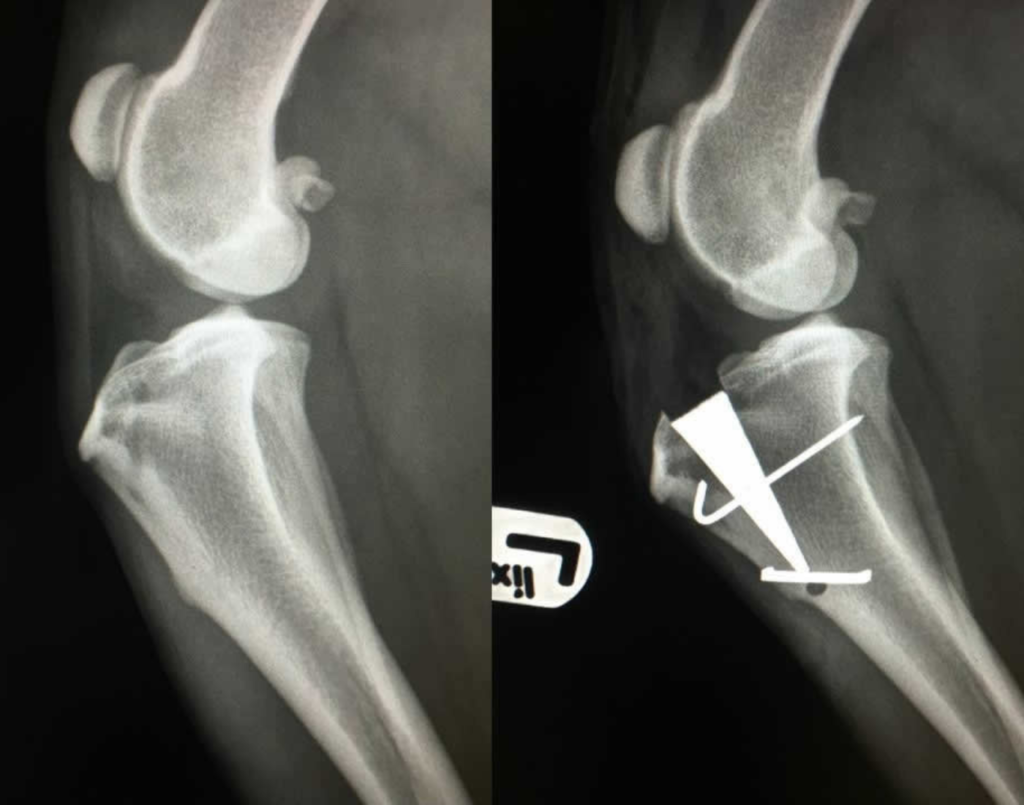
We perform a range of orthopaedic surgery from Cruciate Repair, Tibial Tuberosity Advancement to MMP (Modified Maquet Procedure).
Complex Fracture Repair
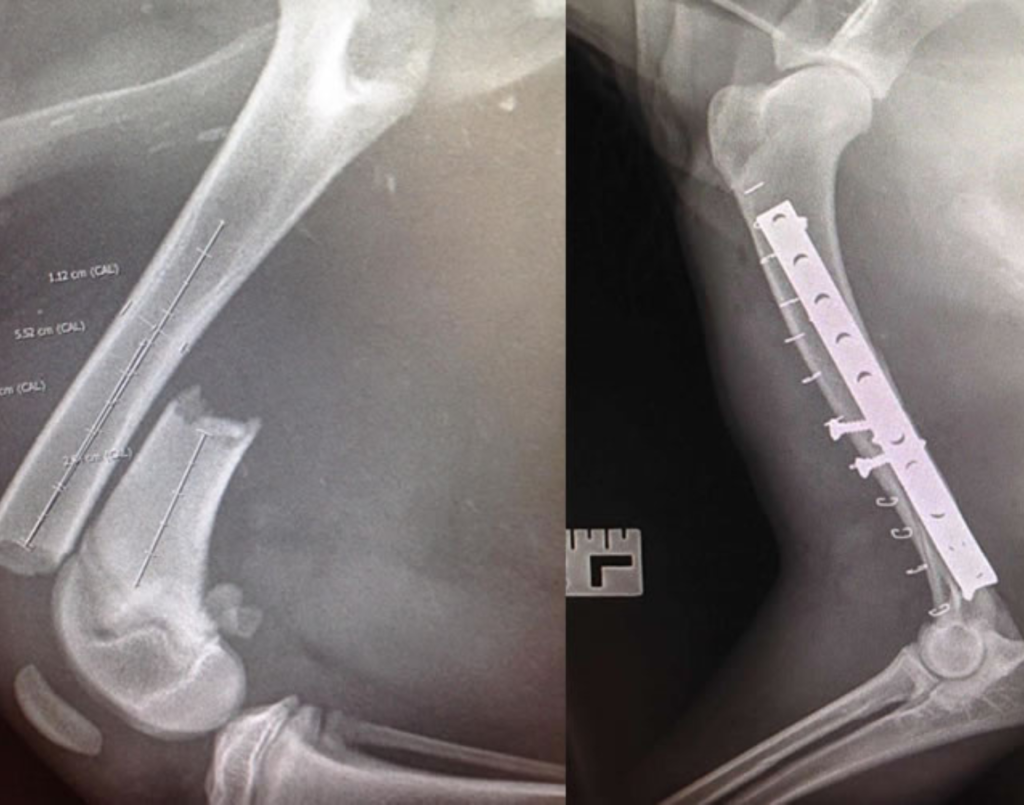
We can perform fracture repair in even the most complex of cases with a combination of screws, plates and wires.
What are the benefits of this procedure to owners and their pets?
* Less pain after the operation
* Smaller wounds to heal
* Quicker recovery from surgery
* Quicker return to normal exercise
What is involved in the procedure?
We operate under general anaesthesia, and two small holes are made in the midline of the abdomen. Comparatively, a standard open bitch spay incision may be 4-6cm or sometimes larger for larger dogs.
The holes allow us to insert:
* Videoscope (camera) – to view the abdomen
* Instruments – to grasp the ovary
* Vessel sealer – to cauterise the ovarian attachments and cut them away.
We remove the ovaries, and the tiny wounds are closed with internal dissolving stitches, meaning that lampshade “Buster” collars are usually unnecessary.
How do I care for my dog after the procedure?
She will go home the same day and will need to take it easy for a few days. Most bitches will be fine to resume normal leash walks after 3 days. There will be some pain-killing medication to take initially, and we’ll do a routine recheck after 7 days.
Cruciate & Knee Surgery
Cranial cruciate ligament failure is a common orthopaedic problem in dogs. This ligament stabilises the knee joint while allowing it to flex and extend. In most cases, the ligament fails due to a degenerative process. As a result, the other ligament may also become affected over time. However, in some cases, the cause is an athletic injury, particularly in active dogs that jump.
MMP (Modified Maquet Procedure)
One of the procedures we perform is the MMP (Modified Maquet Procedure). This technique advances part of the tibia. Consequently, it changes the forces within the knee joint. As a result, it helps to reduce instability caused by ligament rupture.
TTA (Tibial Tuberosity Advancement)
Similarly, TTA (Tibial Tuberosity Advancement) is another surgical option. It is used to treat cranial cruciate ligament rupture in dogs. During this procedure, the top of the shin bone (tibia) is cut and moved forward. It is then stabilised in its new position. However, TTA is a major surgery and can involve complications. Therefore, it is only recommended when the benefits outweigh the risks and when other treatments are less effective.
In addition, we perform a lateral stabilising suture technique. This method helps hold the joint firmly in place. As a result, it improves stability and supports healing. In fact, this is one of the most commonly performed surgeries for cruciate ligament rupture in dogs.
After surgery, we monitor your dog closely. For example, we carry out a check-up 5 days after the procedure. Then, we examine your dog again at 10–14 days. In addition, we routinely perform a follow-up X-ray within the first month. This ensures everything remains in the correct position. If recovery is progressing well, we gradually increase exercise levels, although your dog should remain on a lead at first. Typically, most dogs can return to normal activity after 2–3 months. Finally, we recommend physiotherapy to support recovery, as this can help improve strength and mobility after stifle surgery.
Complex Fracture Repair
We perform complex fracture repair in even the most difficult cases with a combination of screws, plates and wires.
Afterwards, we recommend that all pets that have undergone extensive orthopaedic surgery follow a strict post-operative physiotherapy regime. Our physiotherapist is Chloe.
Contact Us
For non emergency and general enquiries
Our Clinics
Purton Road & Cat Clinic
Monday - Friday | 8.30am – 6.30pm
Saturday | 8.30am -1.00pm
Sunday | Emergencies only
01793 526780
Greenbridge
Weekdays (excl Wed) | 8.30am – 6.30pm
Wednesday & Weekend | Emergencies only
01793 511267
Wootton Bassett
Monday, Tuesday, Wednesday, Friday | 8.30am – 6.30pm
Thursday & Weekend | Emergencies only
01793 230266